
Meet the Team
Our team brings together a diverse mix of thinkers, doers, and creators, united by a shared goal: to design practical, user-centred solutions that help organisations evolve and thrive.
Team Members
- Sally Sloley
- Soma Mazumder
- Shamistha Fernando
- Stephen Reed
- Laust Søndertoft Pedersen
- Lisa Blandford

Opportunity:
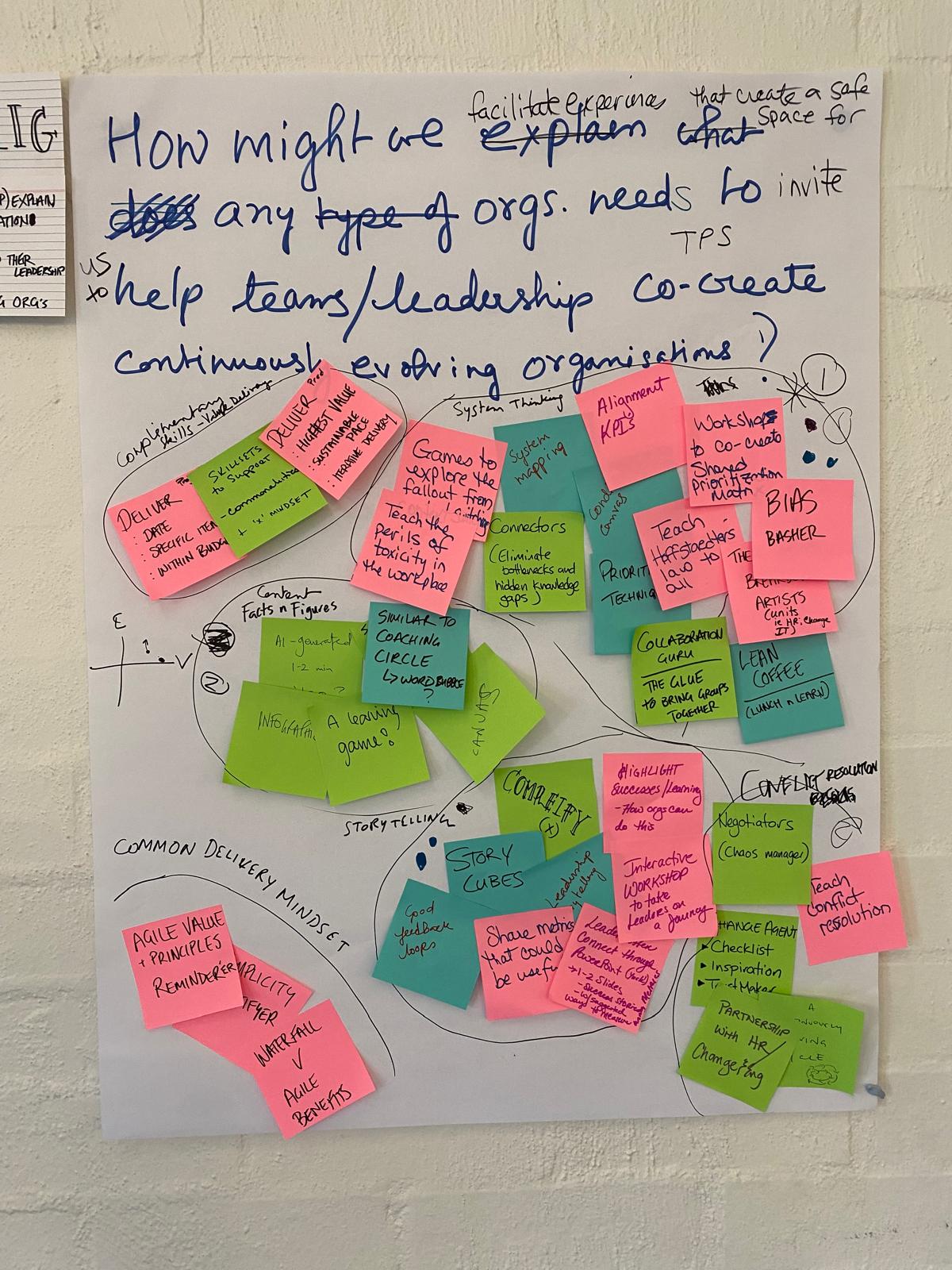
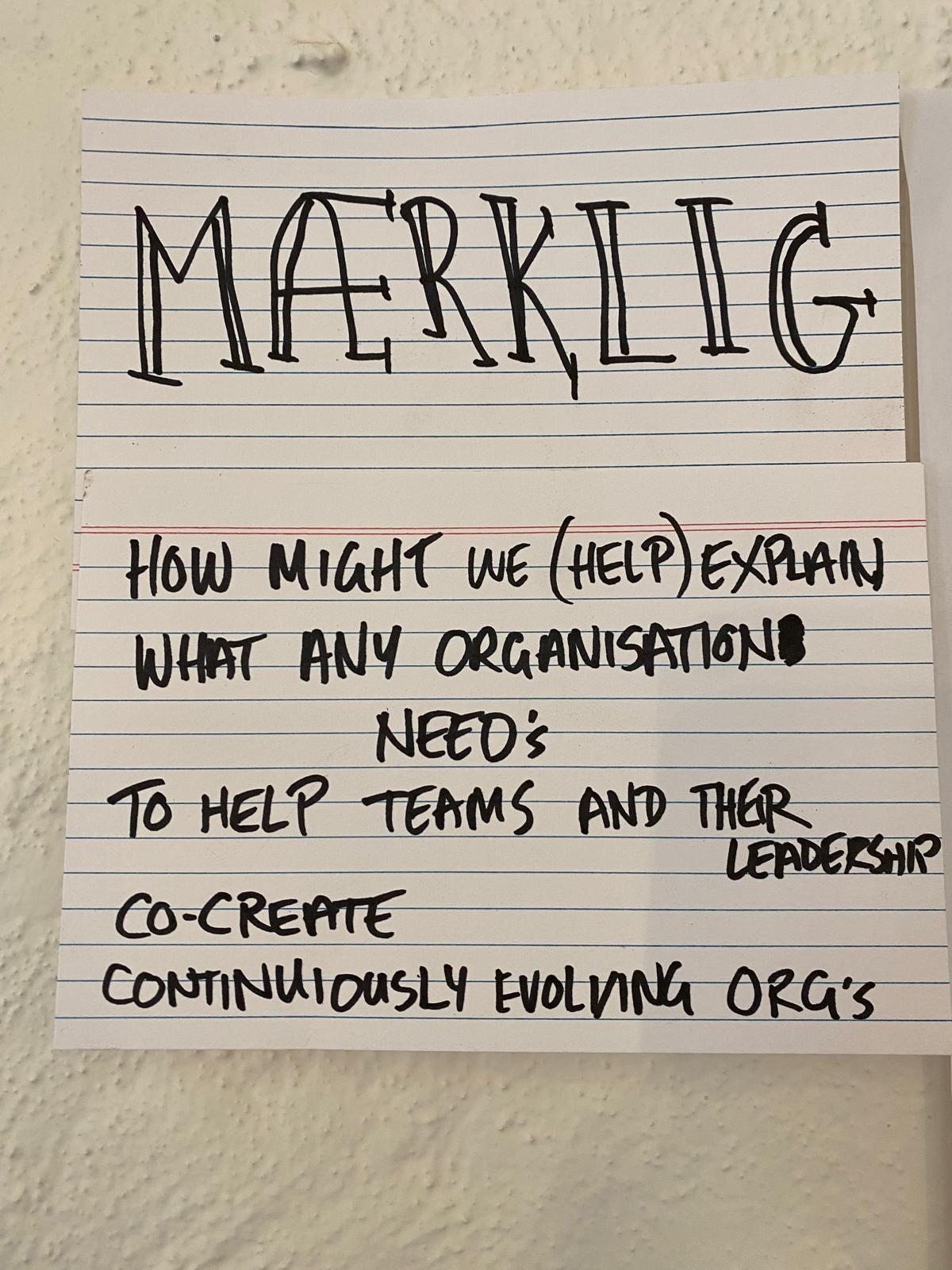
How might we explain what any organisation needs to help teams and their leadership co-create continuously evolving organisations?
Our Approach
We applied Design Thinking and Product Management principles within a focused timebox — moving through discovery, ideation, and delivery. We built and tested prototypes to validate our hypotheses and refine our ideas based on feedback, ensuring what we created truly resonated.


ORG LINGO: Organisational Alignment Terms
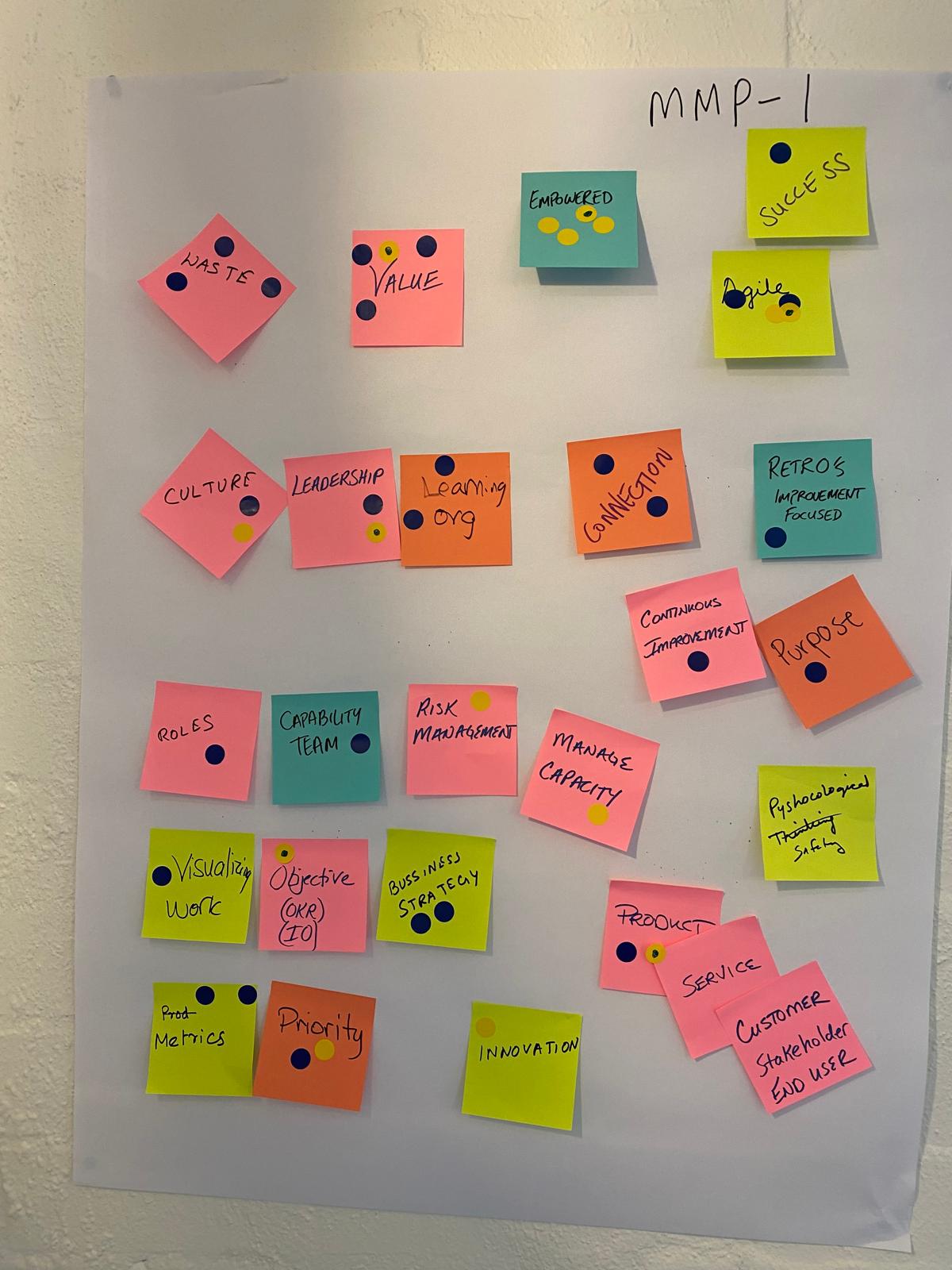
Our first MMP was the creation of a Word Bubble, which we have renamed as Org Lingo.
This experiment set out to uncover and visualise the most commonly misunderstood, misaligned, or misused terms within organisations.
By surfacing these words, we aimed to spark conversations about shared meaning across an organisation — helping teams and leaders align on language, strengthen understanding, and build the foundations for continuous evolution.
Why it Matters
Language shapes culture. When teams use the same words but mean different things, misalignment grows.
Org Lingo helps make the invisible visible — turning confusion into clarity, and clarity into collaboration.
By surfacing these words, we aimed to spark conversations about shared meaning — helping teams and leaders align on language, strengthen understanding, and build the foundations for continuous evolution.
Why it Matters
Language shapes culture. When teams use the same words but mean different things, misalignment grows.
Org Lingo helps make the invisible visible — turning confusion into clarity, and clarity into collaboration.
How to Use It
Use Org Lingo as a conversation starter and alignment tool:
- Explore the Word Bubble – Review the common organisational terms displayed.
- Select a Few Words (or all of them) – Choose the ones that create the most confusion or variation in your teams.
- Define Together – Facilitate a short session with key stakeholders to discuss and agree on what each term means in your organisation’s context.
- Document and Share – Capture agreed definitions in a shared space (e.g., SharePoint, glossary, playbook, or wiki).
- Revisit Regularly – Language evolves. Reassess terms each planning cycle or major organisational shift to keep meaning consistent.
Below are example definitions that can be used as a starting point for discussion and alignment. These aren’t intended as final answers, but as prompts to help organisations find their own shared meaning.
1. Strategic Alignment & Value
Purpose: Clear reason why the organisation or team exists; connects daily work to strategic goals of the organisation.
Business Strategy: The overarching direction and priorities guiding all decision-making and investment.
Value: The tangible outcomes or benefits delivered to customers internally or externally, stakeholders, or the organisation.
Objective (OKR): Mid level Objectives linked to Strategy with measurable key results that help define success and provide focus for teams.
2. Leadership & Culture
Leadership: The behaviours, actions, and mindset that inspire, align, and empower others.
Roles: Clarity on who is accountable for what, ensuring decisions and responsibilities are well understood.
Culture: The shared beliefs, norms, and behaviours expected by the organisation that shape how people work together.
Empowerment: Teams trusted to make decisions and take ownership, supported by leaders who create psychological safety and provide the appropriate level of empowerment to achieve the Objectives given to teams.
Capability Team: A group focused on building skills, practices, and ways of working across the organisation in order to deliver the value and Objectives of the organisation.
3. Delivery Excellence & Continuous Improvement
Manage Capacity: Balancing workload and identifying the right people with the right skills to maintain sustainable and valuable delivery.
Waste: Anything that doesn’t add value; this includes identifying and removing waste in processes, workflows and any inefficiencies that slow the team down.
Continuous Improvement: Ongoing reflection and adaptation to improve performance and outcomes, done on a regular basis and appropriately assigned and tracked.
Retros (Improvement Focused): Regular sessions to reflect, learn, and identify actions for improvement.
Learning Org: A culture that values curiosity, experimentation, and shared learning.
Risk Management: Proactively identifying risks and managing potential issues that may impact delivery of value.
4. Collaboration & Engagement
Connection Sessions: Informal connection opportunities that build relationships and trust such as sharing or learning sessions between teams.
Priority: Priorities must be articulated clearly and with context so there is shared understanding of what is most important right now and why.
Visualising Work: In order to improve transparency of progress visualise work in progress to support alignment and accountability.
5. Innovation & Product Focus
Innovation: Be clear on what innovation means to the organisation and create an environment where new ideas, solutions, or improvements that drive better outcomes are regularly explored.
Product / Service: Be clear on what your product is and who your customer is and define what value teams are creating that impacts the product / service to meet customer needs
Product Metrics: Measures that indicate the health, performance, and value of products or services.
Psychological Safety: Create an environment where it is safe to suggest improvements and identify waste in the system or organisation, all in order for progression to be made.
Success: Defined indicators that show progress toward desired outcomes (qualitative or quantitative).
Agile: A mindset and approach focused on flexibility, collaboration, and delivering value iteratively defined by 4 values and 12 principles from the Agile Manifesto.

 Alex Sloley
 Elena Aminova
 joseysimpson17
 mwsummers
 Frederik Vannieuwenhuyse
 Agile Coaching Retreats